

The City's Public Works crews are responsible for clearing the roads, bus shelters, select sidewalks and parking lots in a timely manner. Work is conducted on a priority basis, beginning with main arterials, steep hills, school zones and bus routes. This is followed by residential roads and cul-de-sacs, which we aim to clear to a safe and passable condition within 48 hours of the end of the snow event.
Despite the efforts of a highly skilled snow removal crew, conditions can deteriorate and roads can become treacherous. Drivers are always advised to exercise caution. Please review the FAQ below to learn more about our processes and priorities.
The City of Penticton has a prioritized snow removal program.
Priority 1 Routes
- Major collectors: main routes serving as connectors/collectors between areas and routes
- Steep grades: hilly terrain with high traffic volumes
- Roads serving emergency routes to hospitals and fire equipment
- Major transit routes: serving the majority of transit users
Priority 2 Routes
- Collector roads (remainder of)
- School zones: serving as routes to access school
- Main industrial routes
- Minor transit routes
Priority 3 Routes
- The remainder of the routes in the City, typically local roads
Please note it takes us approximately 48 hours to reach the residential streets and cul-de-sacs from the time it stops snowing. If snow falls again within that time, crews must return to streets with higher priority.
Be careful on the road
- Stay home if you don’t have to travel. More cars on the road increase the risk of accidents and interference with crews.
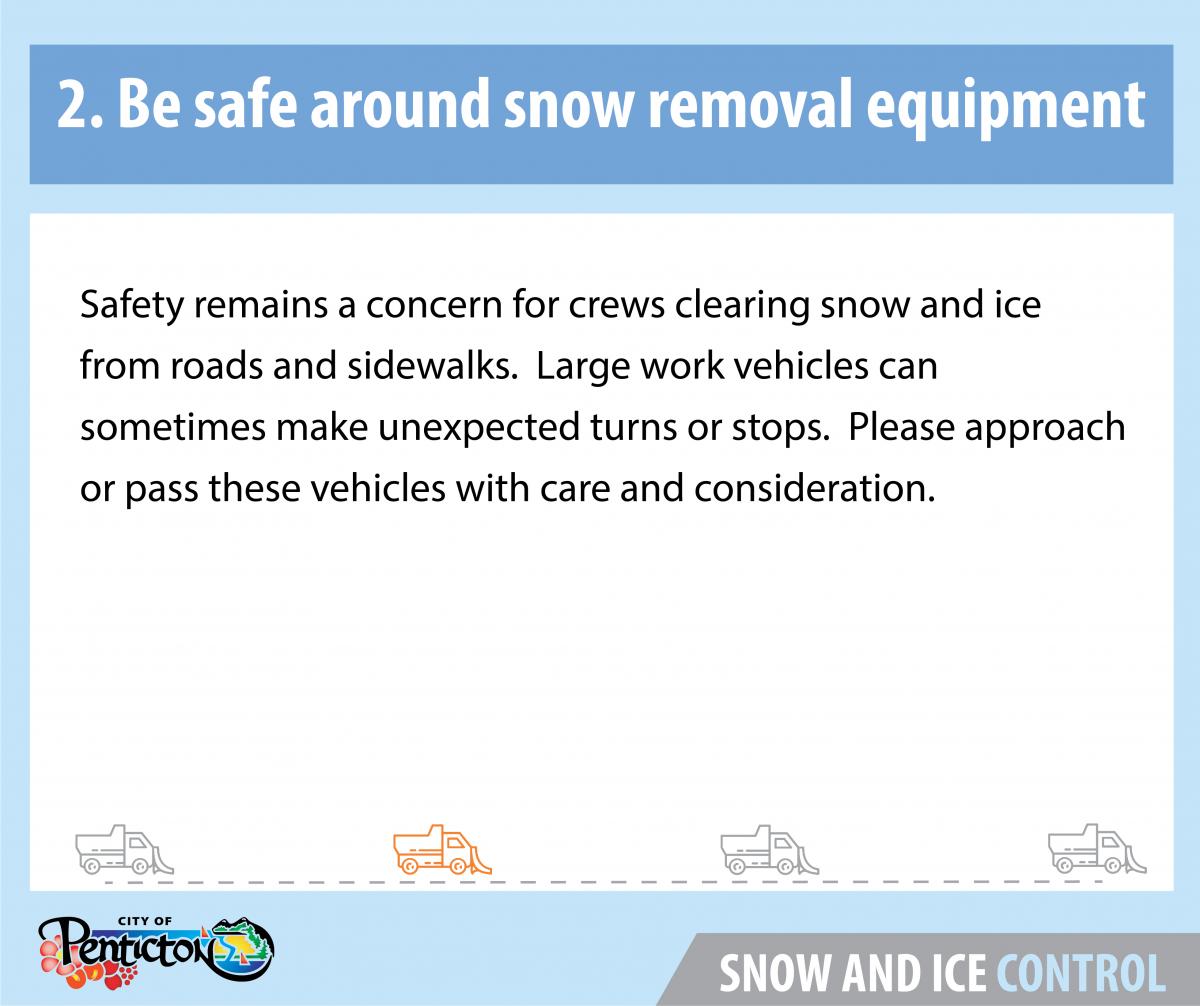
- Approach or pass snow clearing vehicles with care and consideration. Large work vehicles can sometimes make unexpected turns or stops.
- Surfaces such as roads, walkways and parking lots may become icy and slippery. Slow down driving speeds in slippery conditions, drive to the conditions and watch for taillights ahead while maintaining a safe following distance.
Click the buttons below to review the 2025-2026 Snow and Ice Control Policy items.
Download the Snow & Ice Control Policy
View the Roadway Snow Removal Priority Map
View the Stairways, Sidewalks & Bridges Priority Map
View the Anti-Icing Priority Map
Tips:
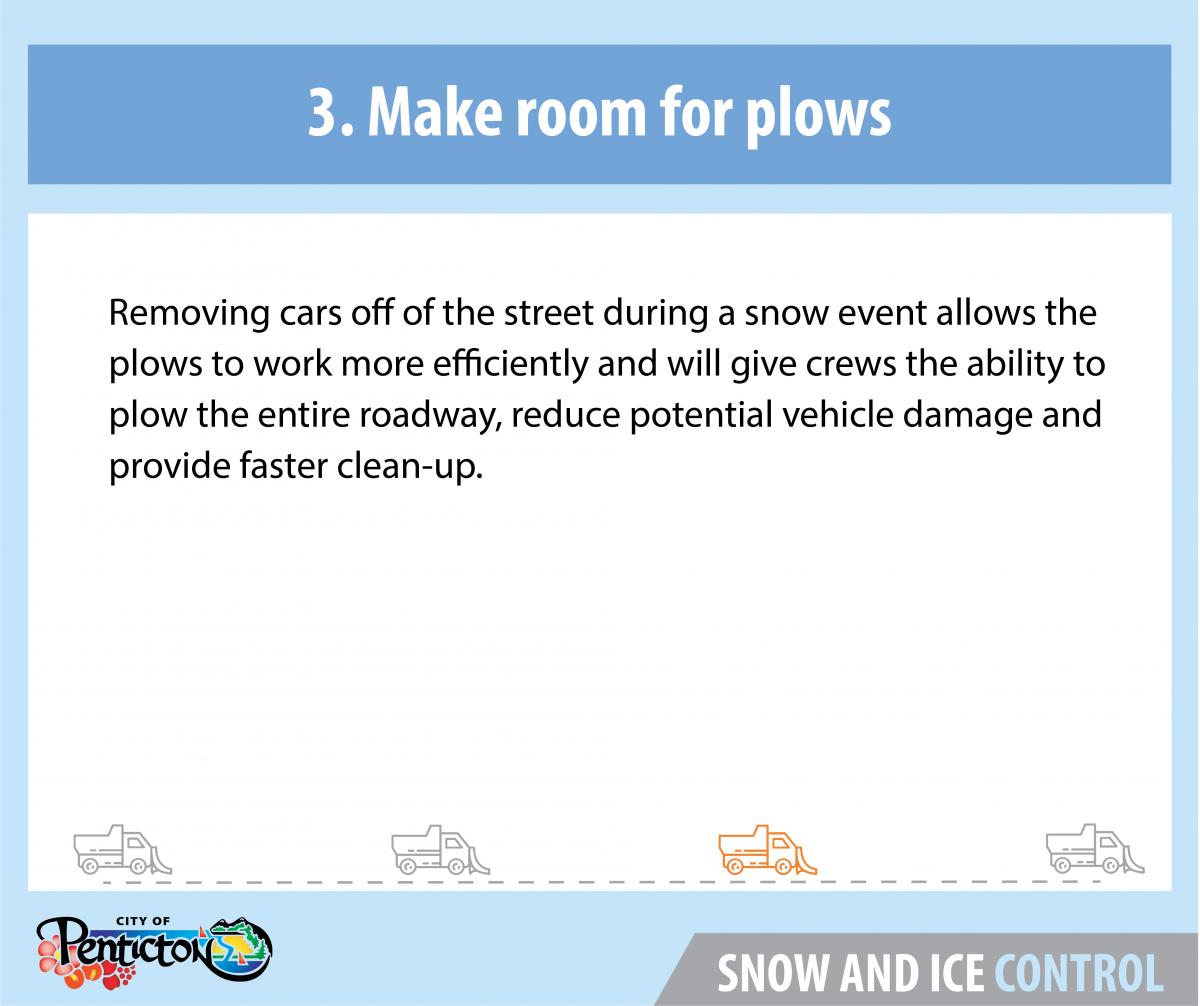
- Remove cars off of the street so plows can work more efficiently and clear the entire roadway.
- Do your best to clear all sidewalks adjacent to your property before 11 a.m. the following day after the snow event, in accordance with the Good Neighbour Bylaw. This also includes the sidewalk at the transit stops if you happen to have one in front of your property.
- Placing the cleared snow on the property side of the sidewalk rather than the road side will reduce the chances of the snow being pushed back onto the sidewalks as snow plows widen out the winter roadways.
- Remember when shovelling your driveway to pile the snow on the left side of the driveway (facing the property), so when plows go by, they won’t drag the shovelled piles back into your driveway entrance.
- Clear the snow away from fire hydrants for easy access by firefighters if needed.

- Be a snow angel and help your neighbours who need assistance.

- Clear any catch basins on your street to allow the water to flow. Not only will this reduce flooding but it will get the water off the streets to reduce icy patches when temperatures drop.

- Unsure about garbage collection? Place your carts out at their designated collection point by 7 a.m. on your regularly scheduled garbage day. Garbage collection may be limited in laneways and side streets that trucks cannot safely access. If your garbage is not collected, residents can place an extra bag of garbage alongside their carts on their next collection day.
We have our full fleet of snow equipment in operation.
City equipment available
- 5 large snowplow trucks
- 4 rapid response snowplow trucks
- 1 loader
- 2 anti-icing equipped trucks
- 2 backhoes
- 3 mowers with snow attachments
- 1 municipal tractor (for clearing walking paths and bike lanes)
- 1 ATV with blade
The snow-clearing crew includes 41 staff, including 23 hand crew.
Crews hand shovel:
- 21 stairways
- 14 bridge pedestrian walkways
- 30 parking lots
- 44 transit stops
- 26 km of sidewalks and walkways
If your business is located next to a sidewalk, it is your responsibility to shovel that sidewalk by 11 a.m. after a snowfall. This is required under the Good Neighbour Bylaw. This also includes the sidewalk at the transit stops if you have one in front of the property.
Place your carts out at their designated collection point by 7 a.m. on your regularly scheduled garbage day. Garbage collection may be limited in laneways and side streets that trucks cannot safely access. If your garbage is not collected by the end of the day, residents can place an extra bag of garbage alongside their carts on their next collection day.
Tips for placing out carts during snow events:
- Find or clear an unobstructed spot to locate your carts.
- Consider placing one cart on either side of your driveway after it’s been cleared of snow.
- Make sure carts are one meter or three feet away from any obstacles.
- Please do not place any carts behind or on top of snow banks.
- Clear the lids of your carts of ice and snow to allow the contents to fall freely when the cart is tipped.
Carts not picked up? Please contact Waste Connections of Canada directly at 250-490-3888 or email csr-penticton-osoyoos@wasteconnections.com
City Council approved the 2023-2024 Snow and Ice Control Policy on Nov. 7, 2023. This policy sets service levels and standards, and is updated on an annual basis to add new infrastructure including roads and lanes, protected bike lanes and transit shelters. This document will be uploaded to this page soon.
Maps
Snow Removal - Stairways, Sidewalks, Bridges, Bus Stops, Parking Lots & Protected Bike Lanes
Top 5 Things You Need to Know

It’s your responsibility to clear the sidewalks next to your property by 11 a.m. after a snowfall, as stated in the Good Neighbour Bylaw. This also includes the sidewalk at the transit stops if you happen to have one in front of your property.
Image


Frequently Asked Questions
Here are some questions we're often asked involving the snow removal process. If you have any concerns or suggestions, please let us know by filling out our online Report an Issue form.
Although not all of our staff work on snow and ice control tasks, we are well equipped and have cross trained our staff as required to ensure we have enough operators and labourers to provide the snow and ice control with the following:
- 5 large snowplow trucks
- 4 rapid response snowplow trucks
- 1 loader
- 2 anti-icing equipped trucks
- 2 backhoes
- 3 mowers with snow attachments
- 1 municipal tractor (for clearing walking paths and bike lanes)
- 1 ATV with blade
The need to clear the bike lanes has not resulted in any delays with the road snow and ice control. The equipment and the operators that are used to clear the Lake-to-Lake Bike Route are not used on roadways.
The City’s Parks staff use their municipal tractor to clear park walkways, sidewalks and the bike routes, which isn’t suitable for roadwork.
In fact, this equipment used to clear the bike lanes has resulted in a higher level of service and less machine time on the 25 km of walkways and various sidewalks as compared to the previous method of clearing the snow.
- The City uses salt, a salt/sand mix and straight sand to ensure the roads are safe for winter driving.
- Salt is used throughout the core of the City because it’s fast acting and extremely effective in our weather conditions.
- Salt/sand mix is used in the higher elevations and agricultural areas. This is more effective in areas that have more snow and cooler temperatures.
- The City sprays a salt/water solution on high-priority streets and parking lots in advance of and during a snowstorm. This helps prevent snow and ice from bonding to the road surface resulting in improved traction and effective removal.
- The anti-icing program is a proactive approach used to improve road safety at the start of a winter storm. Shortly after the liquid solution is applied, the water evaporates, leaving the salt residue in place, where it is needed – rather than applying rock salt, which tends to bounce and roll to the gutters, becoming completely ineffective as an anti-icing agent.
- Another benefit of the program is to reduce black ice conditions. Salt/water solution is an effective tool when temperatures are above -10 Celsius. The product can be applied during regular working hours and will remain effective until it is washed away. This results in a reduction of snow removal crew overtime costs.
The Public Works Department spends an average of $507,000 annually (based on 2019-2022) on snow and ice control on roads, sidewalks and related infrastructure, as outlined in the policy. The 2023 budget request is currently estimated at $510,000, which will be part of the 2023 budget discussion process.
When you consider the large number of driveways in the City, it becomes costly and time-consuming to use additional people and equipment to provide this service.
Remember when shovelling your driveway to always pile the snow on the left side of the driveway (facing the property). This will give you a better line of vision of the approaching traffic and when our plows go by, we won’t drag your shovelled piles back into your driveway entrance.
Yes. If your business is located adjacent to a sidewalk, it is your responsibility to shovel that sidewalk by 11 a.m. after a snowfall. This is required under the Good Neighbour Bylaw. This also includes the sidewalk at the transit stops if you have one in front of the property.
Following a storm, the City’s first goal is to clear priority 1 routes to ensure traffic can safely travel. This includes major bus routes. Once this is accomplished, crews move on to priority 2 routes, including minor bus routes, as well as shovelling and clearing the roughly 40 transit stops with shelters located throughout the city.
For the hundreds of additional transit stops located throughout the city that do not have shelters, it is up to the adjacent resident or business to clear the sidewalk by 11 a.m. following a weather event, as specified in the Good Neighbour Bylaw.
Once priority 1 and 2 roads, sidewalks and parking lots are cleared, City crews focus additional attention to clearing snow from bus stop pull-in lanes.
Yes, the City does tow vehicles from time to time. This is done to ensure routes are clear for emergency and vehicular traffic. Residents who leave or abandon their vehicles during snowstorms and obstruct traffic flow can expect their vehicles to be towed without warning.
To find out if your vehicle has been removed by the City, contact the City’s towing contractor at 250–493-1991. If your vehicle is not located contact the RCMP at 250-492-4300.
Taking our recycling and garbage carts to the curb each week helps keep Penticton tidy and safe. But come winter, having those carts emptied often requires some extra care and attention. By remembering the following three tips, you’ll ensure your recycling and garbage is always ready for pick up… sun or snow!
Carts not picked up? Please contact Waste Connections of Canada directly at 250-490-3888 or email csr-penticton-osoyoos@wasteconnections.com
AIM Roads is responsible for highway maintenance throughout B.C. The company also provides highway condition reporting information to DriveBC three times a day. View this link for a presentation about their services and procedures.
Did you know ?
- When you travel from Kelowna to Penticton during a snow event if you slow from 110 km to 90 km it will only add six minutes to your travel time.
- AIMRoads workforce nearly doubles in the winter months from 65 full time employees to +/- 120 employees.
- Over 30,000 m3 of winter sand is used and over 6000 m3 of salt.
Please submit your concerns or suggestions through our Report an Issue online form. Your submission will be directed to the appropriate contact within the City of Penticton, and all requests will be addressed.
For urgent requests, contact:
Public Works
Phone: 250-490-2500
Email: publicworks@penticton.ca
Good Neighbour Bylaw
As part of the Good Neighbour Bylaw, residents and businesses are required to remove snow and ice from adjacent sidewalks before 11 a.m. following a weather event.
Read more in our Snow and Ice Removal handout.
Have Questions?
Please submit your concerns or suggestions through our Report an Issue online form. Your submission will be directed to the appropriate contact within the City of Penticton, and all requests will be addressed.
For urgent requests, contact:
Public Works
Phone: 250-490-2500
Email: publicworks@penticton.ca